Author: Raghav

  • πŸ† Winning Best Use of Microsoft Foundry at AI Dev Days Hackathon β€” TrafficIQ

    πŸ† Winning Best Use of Microsoft Foundry at AI Dev Days Hackathon β€” TrafficIQ

    πŸ† Best Use of Microsoft Foundry β€” Microsoft AI Dev Days Hackathon Β· 2026

    I am honored to share that TrafficIQ β€” Supply Chain Transport Intelligence won the Best Use of Microsoft Foundry Project award at Microsoft’s AI Dev Days Hackathon. The hackathon brought together a global community of 2,041 registrants and 401 submitted projects, with winners selected across two Grand Prize categories and four special category awards.

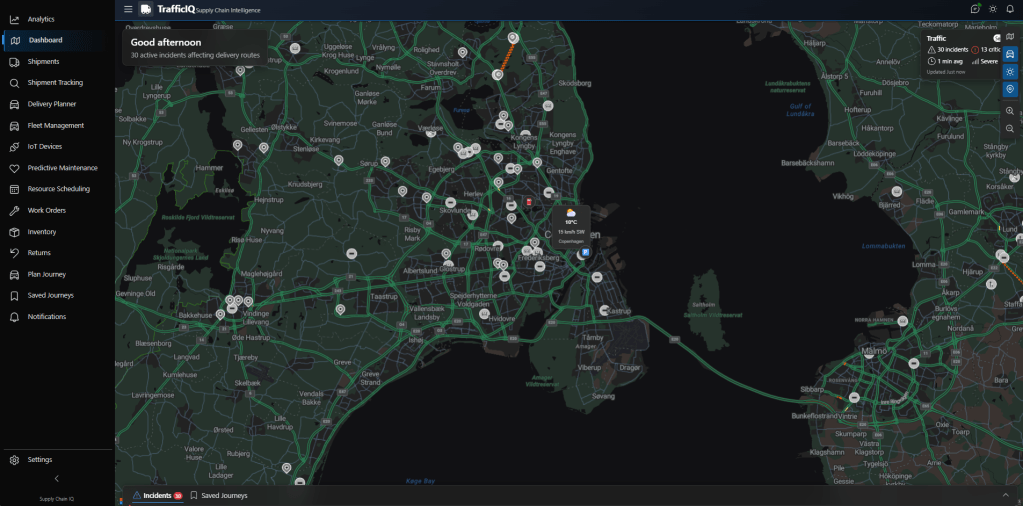
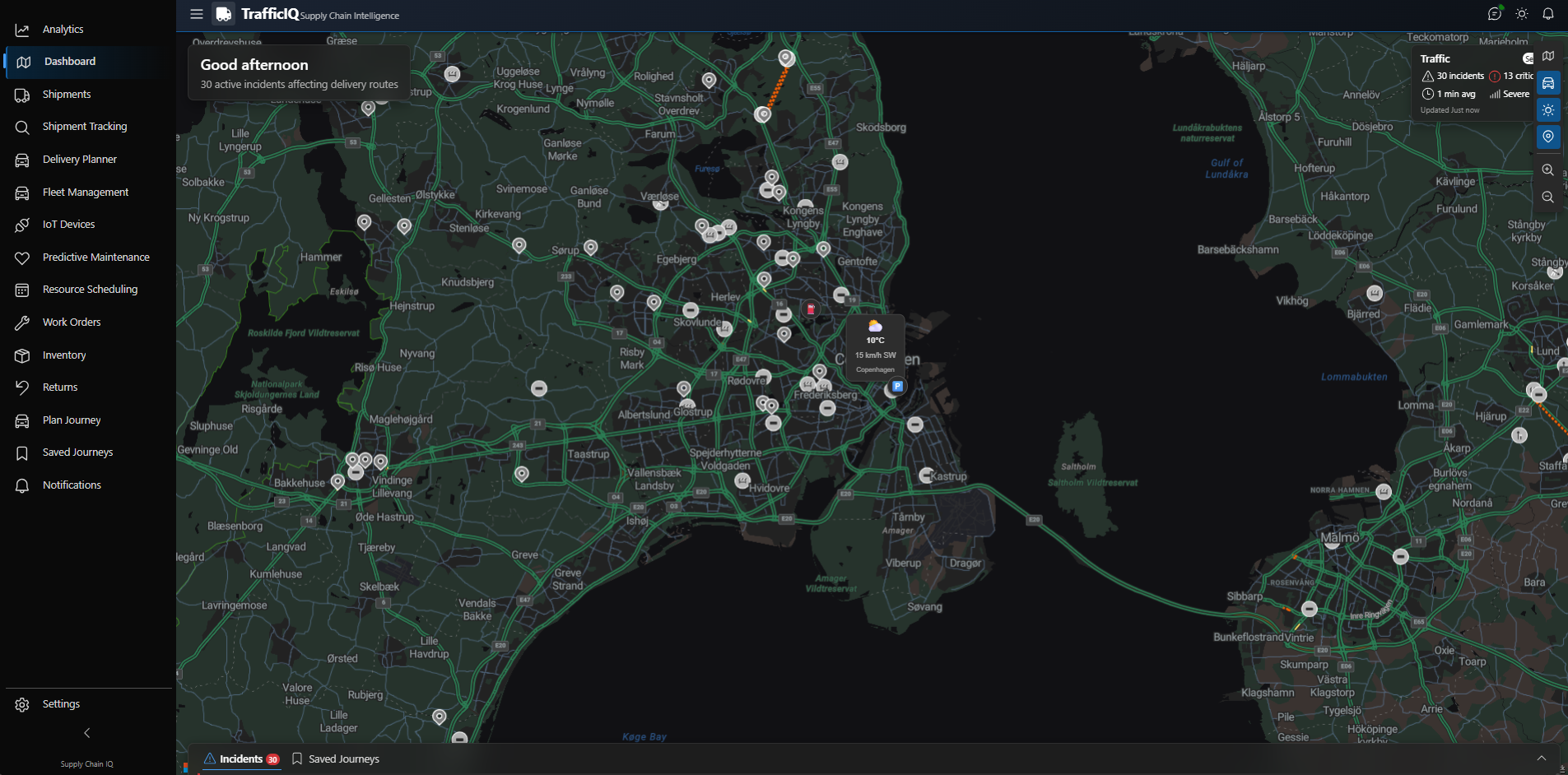
    TrafficIQ Dashboard
    TrafficIQ Dashboard β€” the operational command centre.

    What TrafficIQ does

    TrafficIQ is an enterprise-grade multi-agent AI platform built entirely on the Microsoft AI Platform. It brings real-time traffic intelligence into fleet, logistics and supply-chain workflows β€” so dispatchers, drivers and operations leaders can make smarter routing and delivery decisions before disruptions hit the bottom line.

    The Microsoft stack underneath

    • Azure AI Foundry β€” model hosting, agent orchestration and evaluation
    • Microsoft Agent Framework β€” multi-agent coordination and tool calling
    • Azure Maps β€” routing, traffic incidents and geospatial intelligence
    • Azure IoT Hub β€” fleet GPS telemetry and vehicle sensor streams
    • Dynamics 365 Finance & Operations β€” orders, shipments and field service
    • MCP (Model Context Protocol) β€” standardised tool integration across agents
    • Dataverse, Power Apps & Power Automate β€” the human-in-the-loop UI and workflow layer
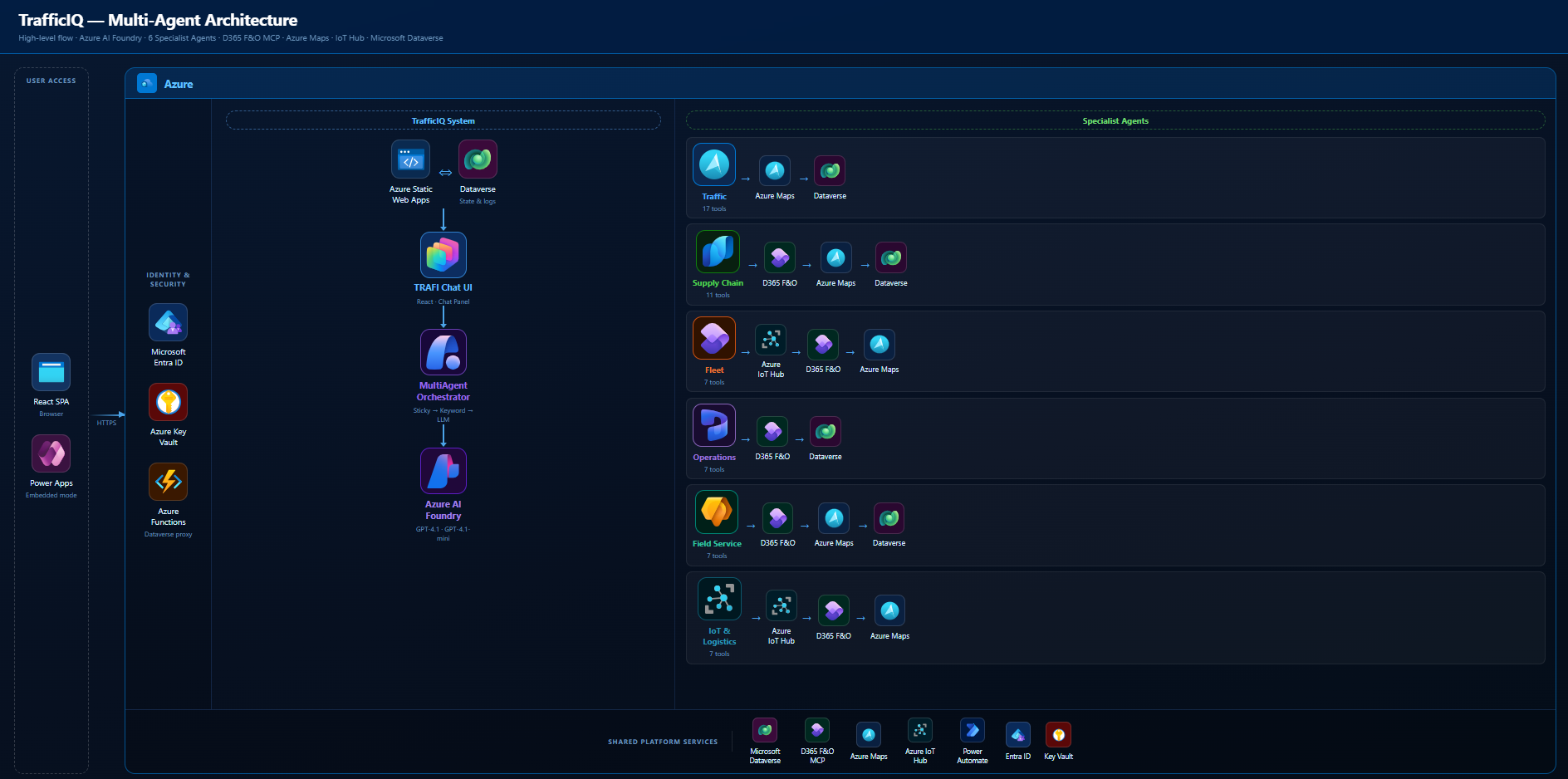
    TrafficIQ Multi-Agent Architecture
    The TRAFI multi-agent architecture β€” 6 specialist agents, 49 composable tools.

    TRAFI β€” the multi-agent core

    At the heart of TrafficIQ is TRAFI, a multi-agent AI orchestration system with 6 specialist agents and 49 composable tools. The agents proactively monitor traffic incidents, optimise delivery routes, and reduce operational disruptions before they impact supply chains. Each agent owns a clear responsibility β€” incident monitoring, route planning, ETA recalculation, fleet health, customer notifications, escalation β€” and they coordinate through the Microsoft Agent Framework.

    What the platform delivers

    • βœ… Real-time traffic awareness across the fleet
    • βœ… Intelligent route optimisation with live re-planning
    • βœ… Fleet GPS visibility and IoT telemetry
    • βœ… Predictive maintenance insights
    • βœ… Automated ETA updates to customers
    • βœ… Field service & inventory management
    • βœ… Enterprise notifications and operational dashboards
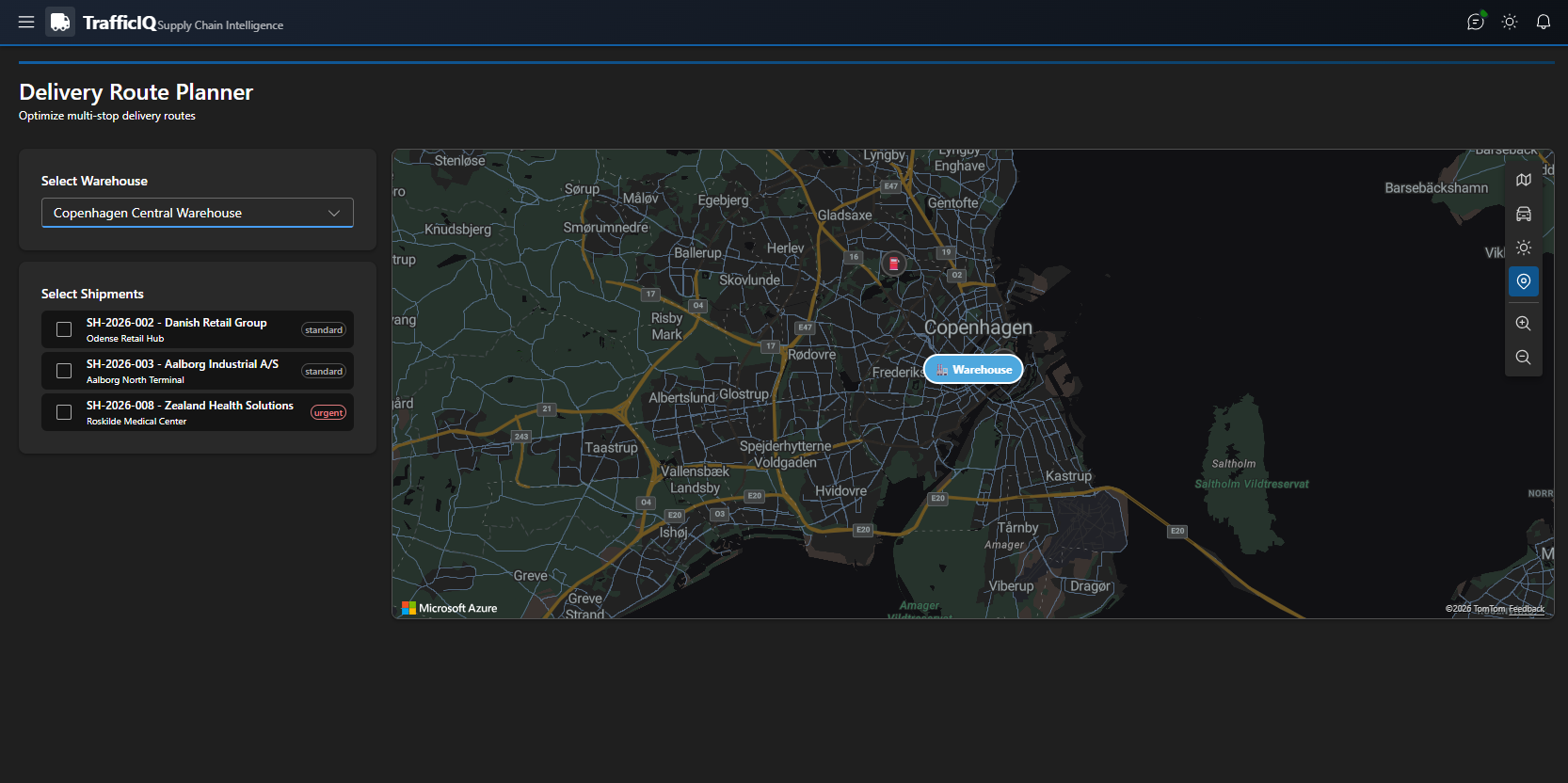
    TrafficIQ Delivery Planner
    Delivery Planner β€” AI-assisted scheduling and route optimisation.
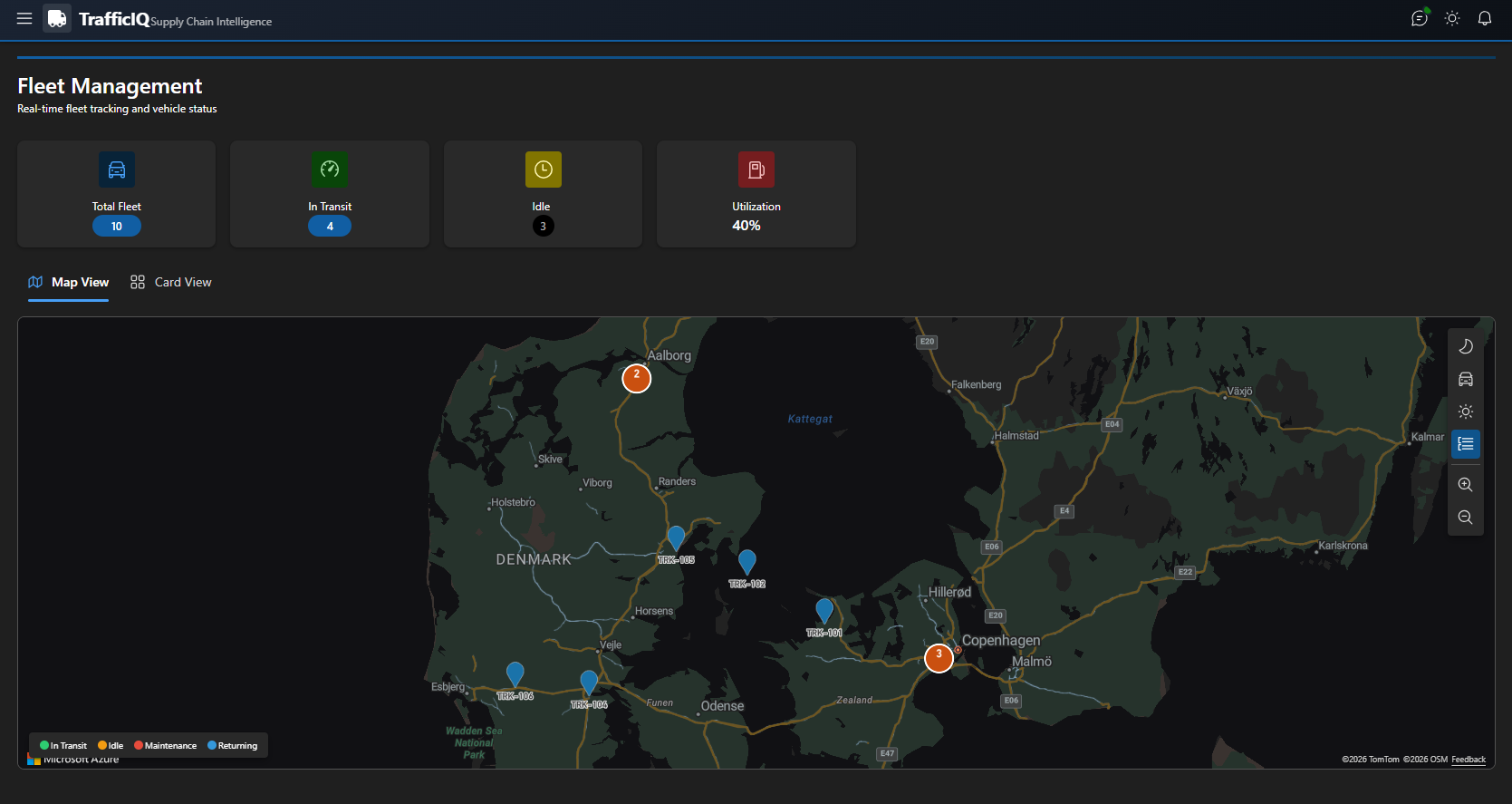
    TrafficIQ Fleet Management
    Fleet Management β€” live vehicle health and GPS telemetry.
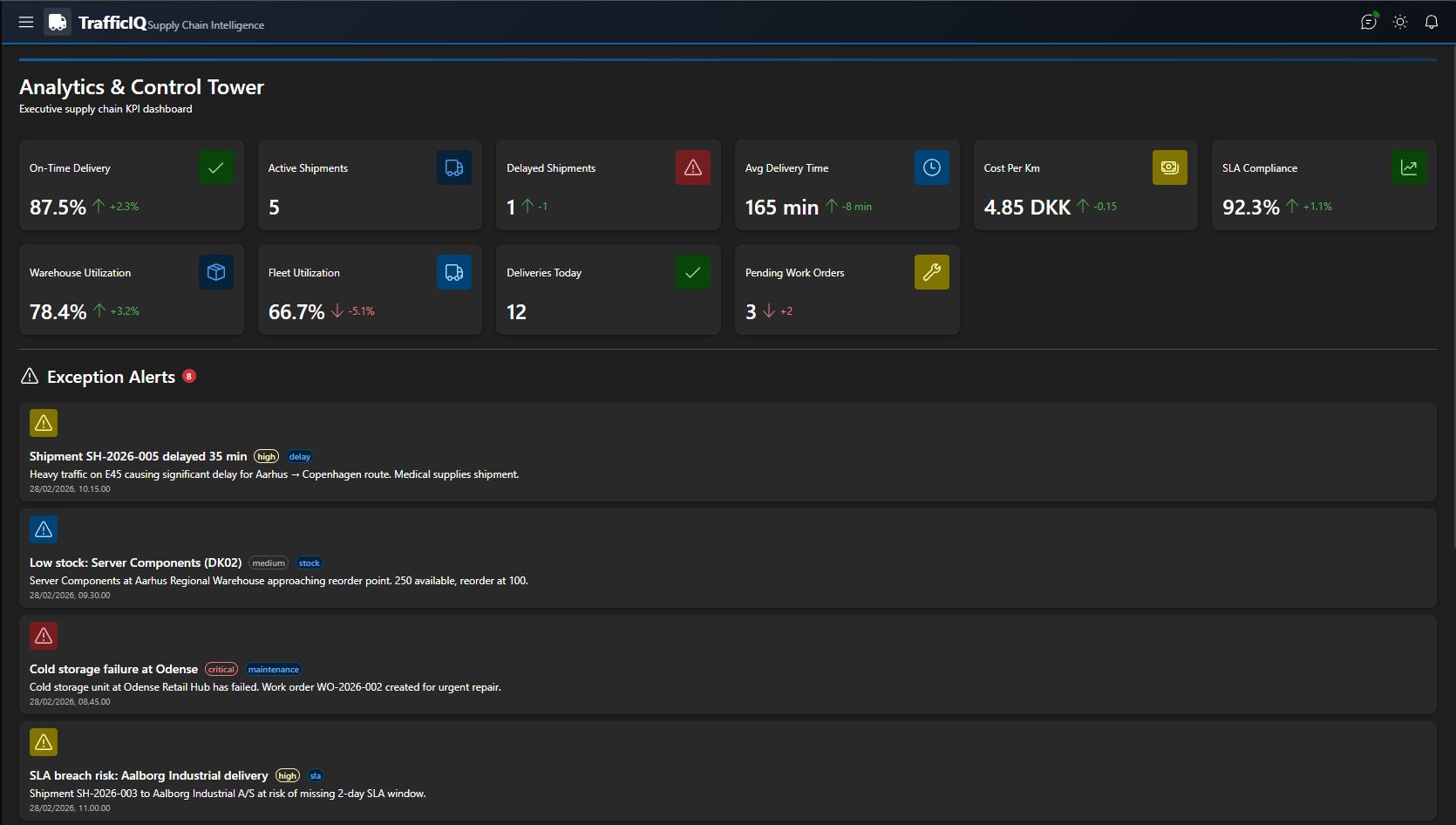
    TrafficIQ Analytics
    Operational analytics β€” KPIs that decision-makers actually read.
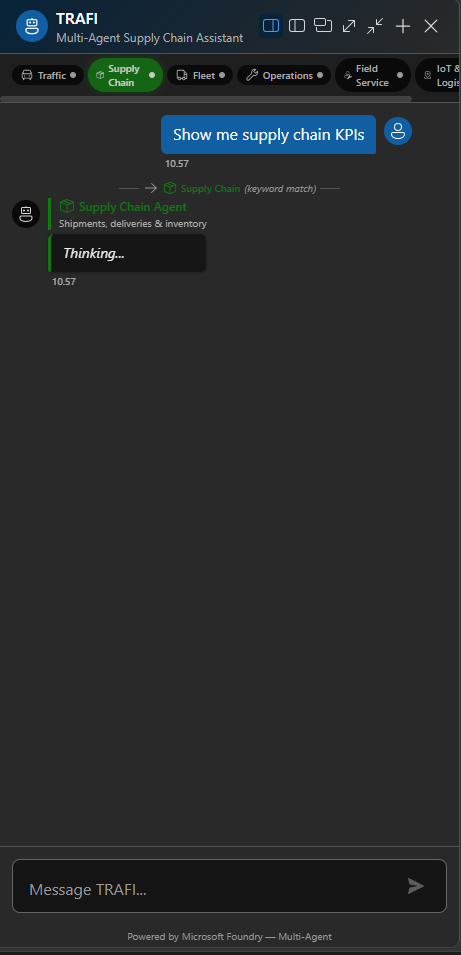
    TrafficIQ AI Chat Agent
    The TRAFI chat agent β€” natural-language ops co-pilot for dispatchers.

    Why this project

    This project was focused on solving practical enterprise challenges using agentic-AI patterns and Microsoft technologies in a production-oriented architecture. Hackathon code often optimises for the demo. With TrafficIQ I tried to optimise for what would survive a 3-month production hardening cycle: typed contracts between agents, explicit human-in-the-loop checkpoints, and a Dataverse-backed operational model that an enterprise IT team could actually own.

    Links

  • Building LocalRAG β€” a fully local AI document search

    LocalRAG is a fully local Retrieval-Augmented Generation application I built to answer one question: how much of a useful enterprise RAG can you run without sending a single byte to a cloud LLM?

    The problem

    Most “build a chatbot over your documents” tutorials assume an OpenAI key, a managed vector database and a cloud orchestrator. That’s fine for prototypes β€” and a dead end the moment you talk to a customer in regulated banking, healthcare or government. They want answers on their data, on their hardware, with no egress.

    The shape of the solution

    LocalRAG uses local Ollama models for both embeddings and generation, FAISS for the vector index, and a content-type-aware ingestion pipeline that handles PDF, DOCX, CSV, Excel, XML and images. Everything runs on a laptop. The full demo is on YouTube.

    • Ingestion: multi-format extractors that preserve enough structure to chunk intelligently β€” tables stay together, lists stay together, headings become metadata.
    • Indexing: FAISS index with content-type tags so retrieval can prefer the right shape of content for the question.
    • Retrieval: semantic top-k with rate-limited retries and a simple fallback when a model is overloaded.
    • Generation: a local Ollama model with grounded prompts and source citations.

    What I’d do differently next time

    Two things. First, evaluation should be a first-class subsystem from day one, not bolted on later β€” even a small golden-question set saves you from regression panic during refactors. Second, content-type awareness is more important than fancy reranking; a boring extractor that respects document structure beats a clever reranker that received bad chunks.

    Repo: github.com/PowerAI-Labs/LocalRAG. Feedback and PRs welcome.

  • Welcome to PowerAI Labs

    Welcome to PowerAI Labs β€” my engineering notebook in public. This is where I’ll write down what I’m building, what I’m breaking, and what survives contact with production on the Microsoft AI stack.

    Why this site exists

    After more than fifteen years shipping enterprise solutions across Dynamics 365, Power Platform, Copilot Studio and Azure AI, I’ve collected a lot of architecture decisions, hard-won lessons and reusable patterns. Most of them live in private Confluence pages, customer engagements and my own notes. PowerAI Labs is where I’m pulling the ones I can share into the open.

    What you’ll find here

    • Architecture deep-dives β€” reference architectures, decision logs and trade-off analyses for AI agents, RAG, and Power Platform solutions at enterprise scale.
    • Lessons from production β€” the things that don’t make it into vendor docs: cost surprises, throttling, governance, prompt drift, eval pipelines.
    • Tutorials and walkthroughs β€” hands-on guides for Copilot Studio, Microsoft 365 Copilot agents, Azure AI Foundry and the rest of the stack.
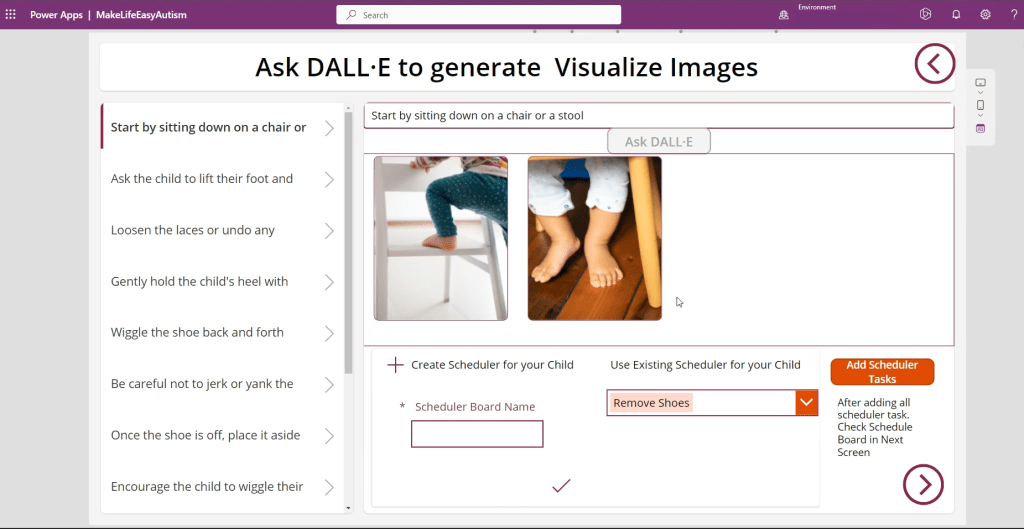
    • Projects β€” open-source experiments like LocalRAG, TrafficIQ and MakeLifeEasy.

    The point of view

    AI in the enterprise is exciting and chaotic at the same time. The vendor demos are perfect; the customer environments are not. My bias is towards architectures that are boring on purpose β€” strongly typed contracts, explicit data lineage, evaluable agents, and a default of “make it observable before you make it autonomous”. Everything I publish here is filtered through that lens.

    Stay in touch

    If a post is useful, share it. If something is wrong, tell me β€” I’d rather be corrected than confident. You can reach me at contact@powerailabs.dev, on LinkedIn, or via GitHub.

    β€” Raghav